
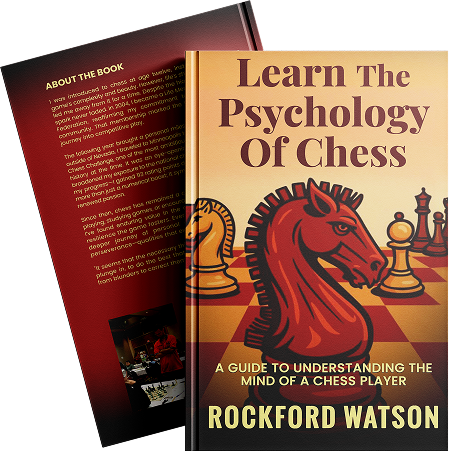
Welcome to the Official website of
David Stanley
Contrary to popular belief, Lorem Ipsum is not simply random text. It has roots in a piece of classical Latin literature from 45 BC, making it over 2000 years old. Richard McClintock, a Latin professor at Hampden-Sydney College in Virginia, looked up one of the more obscure Latin words, consectetur, from a Lorem Ipsum passage, and going through the cites of the word in classical literature
About The Author

Meet David Stanley
Contrary to popular belief, Lorem Ipsum is not simply random text. It has roots in a piece of classical Latin literature from 45 BC, making it over 2000 years old. Richard McClintock, a Latin professor at Hampden-Sydney College in Virginia, looked up one of the more obscure Latin words, consectetur, from a Lorem Ipsum passage, and going through the cites of the word in classical literature.
Contrary to popular belief, Lorem Ipsum is not simply random text. It has roots in a piece of classical Latin literature from 45 BC, making it over 2000 years old.
Learn The
PsychologyOf Chess
Contrary to popular belief, Lorem Ipsum is not simply random text. It has roots in a piece of classical Latin literature from 45 BC, making it over 2000 years old. Richard McClintock, a Latin professor at Hampden-Sydney College in Virginia, looked up one of the more obscure Latin words, consectetur, from a Lorem Ipsum passage, and going through the cites of the word in classical literature.
Contrary to popular belief, Lorem Ipsum is not simply random text. It has roots in a piece of classical Latin literature from 45 BC, making it over 2000 years old.
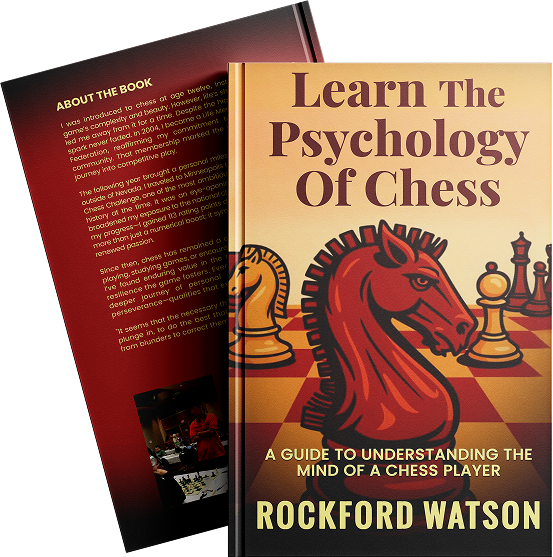
Learn The
Psychology Of Chess
In a world where every move counts, “Learning the Psychology of Chess: A Guide to Understanding the Mind of a Chess Player” takes you inside the mind of a player under pressure. This isn’t just a game of pieces. It’s a test of focus, emotion, and resilience. Discover how the battles on the board mirror the ones within us, and how mastering the mind can change the way you play and live. Step into the world where psychology meets strategy, watch the video trailer now!
My Blogs
FAQS
Frequently Asked Questions
What cognitive processes distinguish expert chess players from novices?
Expert chess players differ from novices not by raw intelligence, but by how they *organize and retrieve knowledge*. Decades of research (notably by Chase & Simon, 1973) show that masters store thousands of chess “chunks” — familiar configurations of pieces — in long-term memory. When faced with a position, experts recognize meaningful patterns almost instantly, guiding their focus to relevant moves and pruning bad options early. Their working memory isn’t larger, but more *structured*, allowing efficient recall and evaluation. This ability leads to faster, more accurate decision-making, even under time pressure. In essence, expertise in chess reflects deep, experience-based perceptual learning.
How do emotions and stress influence chess performance?
Chess performance is highly sensitive to emotional and physiological states. Stress can narrow attention, increase impulsivity, and impair calculation accuracy — especially during time pressure or after mistakes. Anxiety often leads to “choking under pressure,” where performance falls below skill level due to overthinking or loss of confidence. Conversely, moderate arousal can enhance focus and alertness, a phenomenon consistent with the Yerkes-Dodson law. Elite players develop strong emotional regulation skills: maintaining composure, using breathing techniques, and reframing losses as learning opportunities. Ultimately, managing emotion is as critical as mastering tactics; many blunders arise not from ignorance, but from stress-induced lapses.
What is the role of intuition versus analytical thinking in chess?
Chess decision-making blends intuitive and analytical cognition. Intuition — rapid, subconscious pattern recognition — allows experts to “see” good moves almost instantly, based on years of stored experience. Analytical thinking involves deliberate calculation, where players evaluate variations and outcomes logically. Strong players switch fluidly between these modes, using intuition to generate candidate moves and analysis to verify them. Psychological research supports a dual-process model (Kahneman’s System 1 and System 2): intuition is fast but fallible; analysis is slow but corrective. The hallmark of mastery lies in knowing when to trust one’s gut and when to engage in deeper computation.
How do motivation, mindset, and self-regulation affect chess improvement?
Long-term chess improvement depends less on innate talent than on *deliberate practice* — effortful, focused work on weaknesses — sustained by motivation and mindset. Players with a *growth mindset* (believing skill can develop through effort) persist through setbacks more effectively than those with a fixed mindset. Motivation may be intrinsic (love of the game) or extrinsic (ratings, recognition), but intrinsic motivation predicts deeper learning. Self-regulation — planning study time, monitoring progress, managing fatigue — supports steady growth. Chess improvement is nonlinear; maintaining motivation during plateaus requires emotional resilience and a clear sense of purpose beyond immediate results.
How do chess players cope with losses, mistakes, and psychological “tilt”?
Losses in chess can trigger frustration, self-doubt, and “tilt” — emotional dysregulation leading to poor decisions in subsequent games. Coping effectively requires reframing mistakes as opportunities for growth rather than threats to ego. Many players use structured post-game analysis to detach emotion from evaluation. Techniques such as mindfulness, journaling, and breathing exercises can reduce rumination and restore composure. Elite players often develop a “process orientation”: focusing on decision quality rather than outcome. Over time, this builds emotional resilience and reduces fear of failure, allowing consistent performance. Psychological maturity in chess comes from learning to *lose well* — constructively and consciously.
Can chess training enhance general cognitive abilities or academic performance?
The question of “transfer” — whether chess improves general thinking skills — remains debated. Some studies suggest chess enhances attention, memory, planning, and reasoning, especially in children. However, meta-analyses indicate that effects are modest and often context-dependent. Improvements may reflect increased *engagement* and *discipline* rather than direct cognitive transfer. Still, chess offers an accessible model for metacognitive skills: thinking ahead, weighing alternatives, and learning from feedback. Educationally, chess supports concentration, patience, and problem-solving persistence. While it may not dramatically boost IQ, chess can nurture *habits of mind* — critical thinking, foresight, and reflection — that benefit broader learning.
What psychological traits are common among elite chess players?
Elite chess players typically share a cluster of psychological traits conducive to deep focus and sustained effort. High *conscientiousness* — discipline, persistence, attention to detail — is strongly correlated with success. Many also exhibit high *openness to experience*, supporting creativity and novel problem-solving. Emotional stability helps manage stress and uncertainty. Studies suggest moderate introversion may aid concentration during solitary study, though social intelligence is vital for tournament life. Elite players also tend toward intrinsic motivation, high achievement orientation, and tolerance for ambiguity. However, personality diversity exists: champions differ in temperament, but all display remarkable psychological endurance and self-discipline.
How does fatigue, concentration, and attention vary over the course of long games or tournaments?
Chess requires sustained concentration for hours, making fatigue a critical performance factor. Cognitive fatigue reduces calculation accuracy, pattern recognition speed, and working memory efficiency. As games progress, players are more prone to “late blunders” due to mental depletion — a phenomenon comparable to decision fatigue in psychology. Sleep quality, nutrition, and hydration significantly affect endurance. Top players use pacing strategies, short breaks, and energy management routines to maintain alertness. Over multi-day tournaments, accumulated stress and fatigue can lead to cognitive overload, reinforcing the need for psychological recovery habits such as mindfulness, rest, and mental resetting between rounds.
How does age, development, or neurodiversity affect chess thinking and performance?
Cognitive development shapes how individuals approach chess. Children excel in learning patterns rapidly but may lack strategic depth or emotional regulation. Adults often possess stronger conceptual understanding but slower calculation speed. Peak chess performance typically occurs in the late twenties, reflecting a balance of fluid intelligence (speed) and crystallized knowledge (experience). With age, declining processing speed can be offset by deeper intuition and accumulated pattern memory. Neurodiverse individuals — such as those on the autism spectrum or with ADHD — may display unique strengths, including hyperfocus or exceptional visualization, illustrating the diversity of cognitive pathways to chess mastery.
What can the psychology of chess tell us about human creativity and problem-solving in general?
Chess offers a microcosm of human creativity and strategic thought. It demonstrates that creativity isn’t purely spontaneous but arises within structured constraints — the 64 squares of possibility. Great players generate original ideas through deep understanding, not randomness, blending knowledge with imagination. Psychologically, creative insight in chess often follows periods of incubation, where subconscious processing yields novel solutions. This mirrors creative processes in art and science. Chess also highlights the interplay between logic and intuition in innovation: even within rigid rules, the mind can produce surprising beauty. Studying chess thus reveals how humans invent, adapt, and find meaning in structured challenges.
Reviews
Hear out what our readers have to say!
Check out the ravings of all the lovely readers of my new book down below!
This book completely changed the way I see chess and myself. Rockford Watson doesn’t just teach you about the game! Watson helps you understand how your mind works when it matters most. I found myself underlining passages that felt like they were written just for me. If you want a book that challenges how you think and play, this is the one to get… I highly recommend this read !!!
I’ve read countless chess books, but none have felt this personal. ‘Learning the Psychology of Chess‘ goes beyond strategy and explores the emotions, focus, and strength behind every move. It’s honest, relatable, and surprisingly inspiring... Even if you’re not a competitive player, you’ll walk away with lessons that stick. I’ve already recommended it to my entire chess club, and they’re loving it…